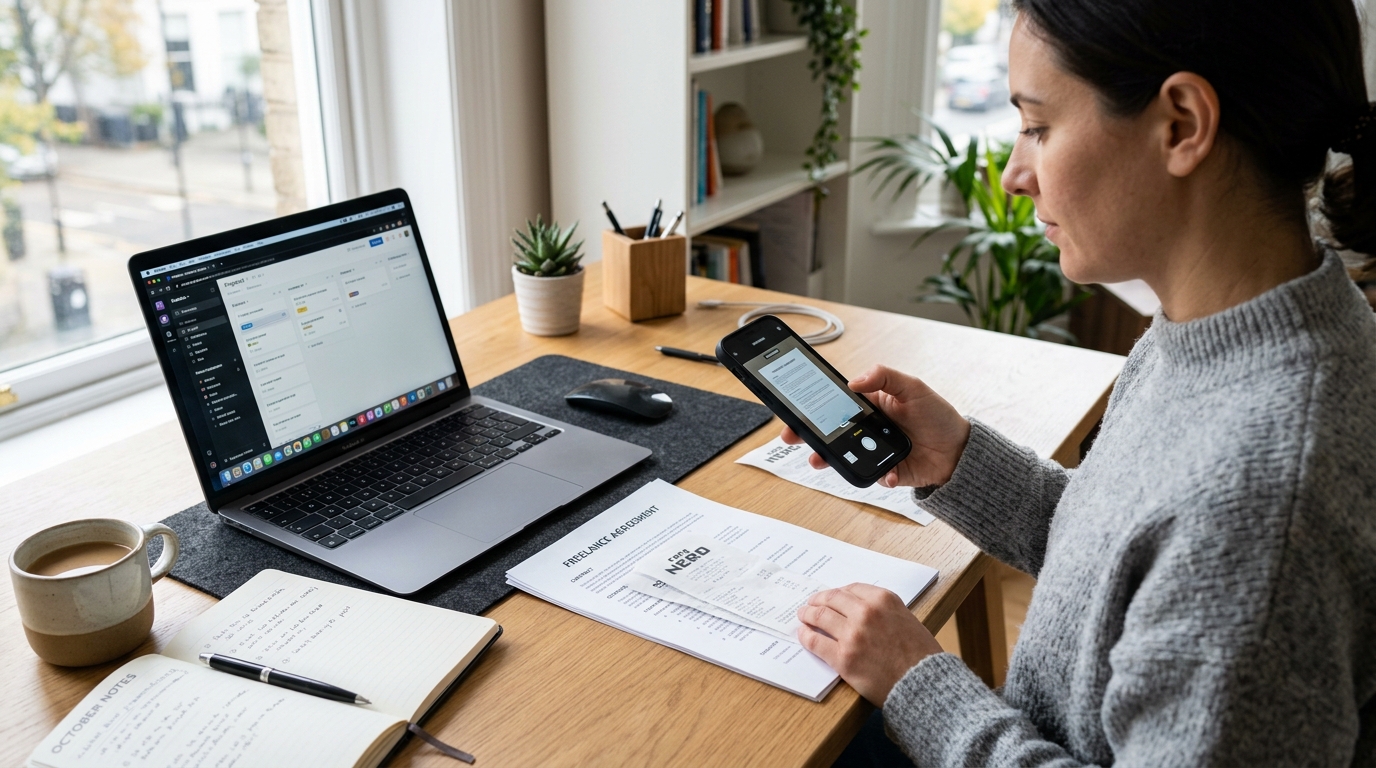
Do people still want one big desktop document suite, or have everyday paperwork habits already moved somewhere else? The short answer is this: most users searching adobe acrobat, scan to pdf, invoice maker, camscanner, or adobe reader edit pdf are not looking for more software complexity. They want a faster way to finish documents on a phone, often in a single sitting.
A document scanning app is now best understood as a mobile tool that captures a paper document with the phone camera, turns it into a usable PDF, and helps manage, share, or combine files without forcing people back to a desktop. This guide covers communication tools for privacy-first calling and messaging, and I see a similar behavior pattern here: users increasingly prefer compact, task-based mobile workflows over feature-heavy systems that assume they have time to organize everything later.
That shift matters for students, freelancers, field workers, solo business owners, and small teams who handle receipts, contracts, forms, notes, and quick invoices from wherever they are. It is less relevant for enterprise departments that need deep compliance layers, advanced desktop publishing, or full-scale records management.
If you want a simple way to scan, organize, and export documents on your phone, Scan Cam: Docs PDF Scanner App is designed for that on mobile platforms. It is especially suited to people who need a professional-looking result without turning document management into a project.
Rethink the old idea that adobe acrobat is the default for everyone
Myth 1: If a document task involves PDF, adobe acrobat is automatically the best fit.
That used to be a reasonable assumption. It is less reliable now. Search behavior tells a different story: many people are not starting with “document suite” intent. They are starting with situation intent. They need to send a signed lease, submit class notes, archive receipts, or turn paper records into shareable docs before the bus arrives.
In practice, that means users often judge a tool by three things first: how fast it opens, how cleanly it captures a page, and how easily it exports or shares the file. Editing still matters, but for a large slice of users, editing is secondary to capture quality and speed.
This is also why generic comparisons such as desktop PDF software versus mobile scanner apps miss the point. The real comparison is between a multi-step workflow and a one-session workflow. Can a person scan, crop, reorder, merge, and send in under three minutes? If not, they keep looking.
That helps explain why searches around camscanner-style experiences remain common even when people also know adobe acrobat by name. They are often comparing workflow shape, not just brand familiarity.
Avoid assuming scan to pdf is only about digitizing paper
Myth 2: “Scan to PDF” is a simple utility task with no broader trend behind it.
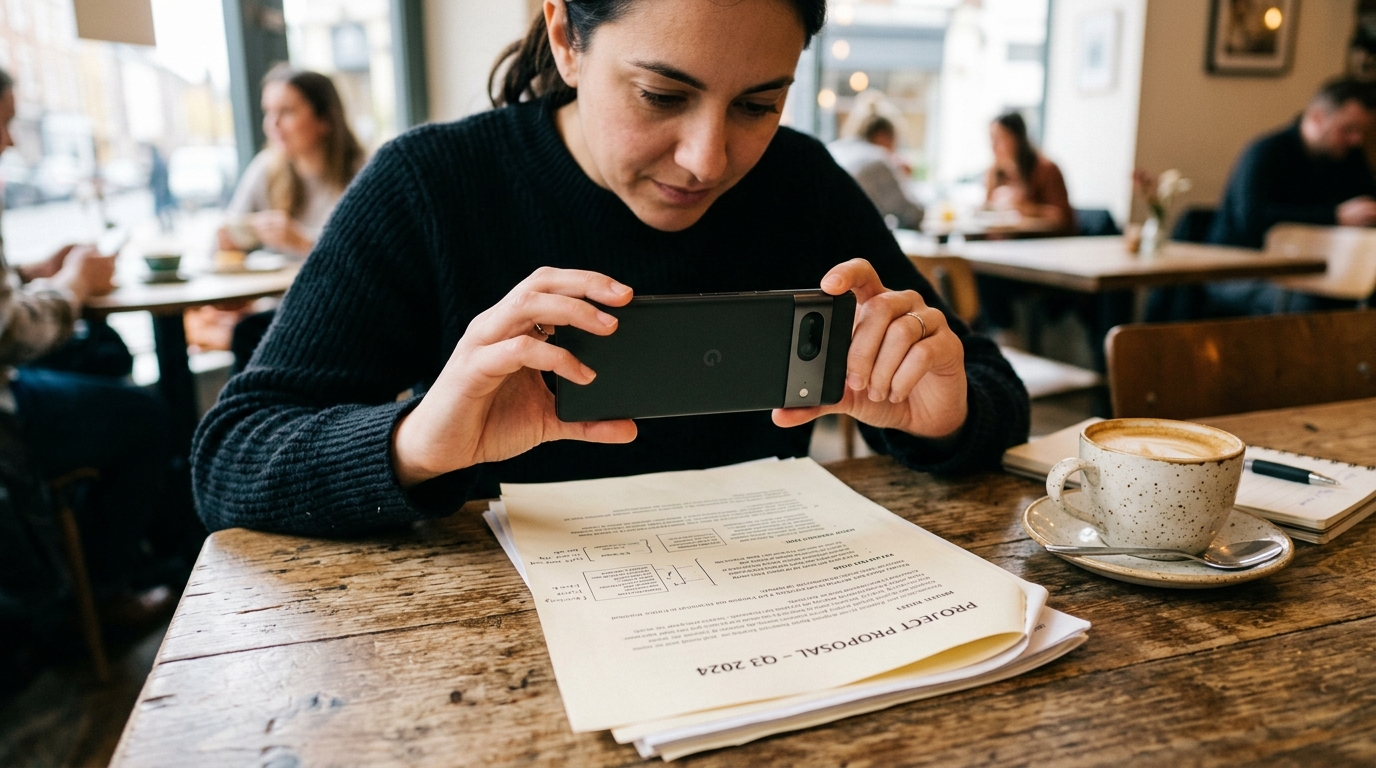
Actually, scan to pdf has become part of a larger behavior change: people now expect the phone to be the first stop for document creation, not the backup option. That changes what they need from a scanner app, whether free or paid.
Today’s user may start with paper, but just as often they start with mixed inputs: printed forms, whiteboard notes, ID copies, receipts, handwritten pages, and photos of documents taken in uneven light. They may also need to merge several files into one PDF before sending it to a landlord, accountant, or client.
That is a market shift worth paying attention to. The category is no longer just about “scanning.” It is about lightweight document management on mobile. Capture is one step; naming, combining, and routing the file are what make the scan useful.
In practice reviewing mobile utility workflows, people often think they need more tools than they really do. A recurring pattern emerges in communication apps: friction usually comes from too many handoffs, not too few features.
So when evaluating any mobile app in this category, I recommend asking:
- Does it capture documents clearly from the camera without excessive retakes?
- Can it create clean PDFs from both paper pages and photos?
- Is reordering or merge functionality quick enough for real use?
- Can you handle files offline when needed?
- Does the interface feel built for occasional users, not just power users?
- Is pricing clear, especially if you only need core scanning and export features?
Those criteria usually reveal more than a long features list.
Notice why invoice maker needs are changing the scanner category
Myth 3: Invoice maker searches belong to a completely different category than document scanners.
Not anymore. For freelancers and micro-business users, invoice creation and document capture increasingly sit in the same daily routine. A person may create an invoice, attach a supporting receipt, scan a signed approval, and send everything as one package. From the user’s perspective, these are not separate software categories. They are one admin task.
This is one of the clearest category trends right now: users do not think in product taxonomy. They think in outcomes. They want to finish billing, recordkeeping, and proof-of-work tasks quickly, often from a phone between meetings.
That has two practical effects. First, people expect a scanner to produce polished, share-ready documents that do not look like rushed phone photos. Second, they increasingly value small workflow touches — page order changes, PDF naming, compact file output, and simple sharing — because those features support the invoicing process even if the app is not an invoice maker itself.
If your workflow involves sending proof with invoices, Scan Cam: Docs PDF Scanner App fits naturally at the document capture stage. It is not trying to replace a full accounting stack; it helps make the supporting paperwork usable.
Who benefits most? Independent consultants, tutors, repair technicians, delivery-side operators, real estate agents, and anyone who bills clients while collecting paper evidence.
Who is this not for? Large finance teams that need advanced accounting automation, tax compliance workflows, or deep ERP integration. Those users usually need a broader system than a mobile scanner app is meant to provide.
Question the belief that adobe reader edit pdf intent is mostly about editing text
Myth 4: People searching adobe reader edit pdf mainly want to rewrite PDF text.
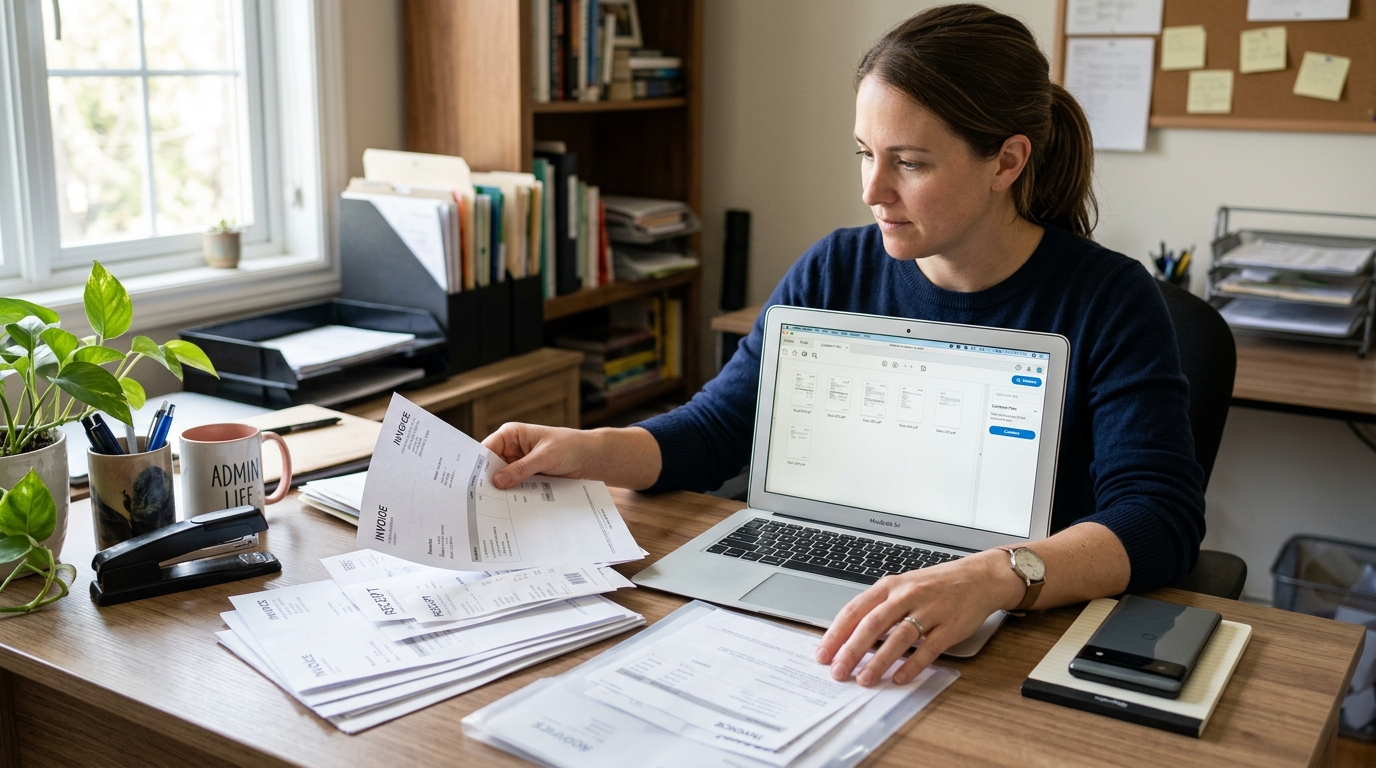
Sometimes they do. But very often, the real need is lighter than that. They want to fix page order, add a page, remove a bad scan, make a file presentable, or convert a messy image capture into something acceptable for sharing. In other words, “edit” often means “make usable,” not “perform desktop publishing.”
This matters because many users overbuy or overcomplicate their workflow. They assume they need heavy editing software when they really need better capture plus a few core post-scan actions.
That is why the search phrase adobe reader edit pdf often overlaps with mobile scanning behavior. The user journey is usually something like this: capture a document, notice the pages are crooked or incomplete, try to fix it, then look for a simpler mobile route next time.
For people with that pattern, a clean mobile-first process beats a feature-rich but fragmented one. A good scanner should reduce the amount of editing needed afterward.
From what I have seen across mobile productivity tools, the best post-scan workflow is usually the one that prevents unnecessary cleanup in the first place.
Choose tools based on behavior shifts, not on brand memory
One of the biggest category mistakes I see is choosing based on what sounds familiar rather than what fits current behavior. Brand memory is powerful. But if your real workflow happens on a phone, while moving, under time pressure, then your selection criteria should reflect that.
Here is a simple decision framework I recommend:
- Start with capture conditions. Do you scan mostly under imperfect lighting, from desks, counters, or car seats? If yes, camera handling matters more than advanced desktop editing.
- Map the next action. Are you archiving, sending, signing, or combining documents? The right app depends on what happens immediately after the scan.
- Count the handoffs. If you move a file through three or four apps just to get a finished PDF, your workflow is already telling you something.
- Separate nice-to-have features from repeat-use features. Many people pay for capabilities they use once a quarter and ignore the basics they need every day.
Unlike traditional office setups, mobile document tools live or die by repetition. If a tool saves 90 seconds on a task you do four times a week, that is more valuable than a long feature list you rarely touch.
For readers who want to understand the broader app ecosystem behind products like this, the team behind Scan Cam builds several utility-focused mobile apps with that same practical emphasis.
Use these real-world answers before you replace your current workflow
Is a camscanner-style mobile workflow still relevant if I already have adobe acrobat?
Yes, if your bottleneck is capturing paper quickly on a phone. Desktop PDF tools and mobile scanning tools solve overlapping but not identical problems.
Do I need an invoice maker inside my scanner app?
Not necessarily. Many users simply need clean supporting PDFs to send with invoices created elsewhere.
What is the best sign that a scan to pdf tool fits me?
Your documents look clear, organized, and share-ready after one pass, without repeated retakes or extra editing.
Should students and solo workers care about offline support?
Usually yes. Weak connections are common in classrooms, shared offices, hallways, and field environments. Offline capture can prevent delays.
Act on the trend: simplify the document path you repeat most
The market shift is not subtle anymore. Users are moving from software-centered thinking to task-centered thinking. They do not want separate mental buckets for scanner, pdf editor, converter, and share tool unless their work truly requires it.
In practice, the best response is not to chase every feature category. It is to identify the document path you repeat most often — receipts to PDF, forms to email, notes to archive, invoice backup to client send — and reduce the number of steps in that path.
If your current setup makes you bounce between capture, cleanup, and export tools, that is usually the friction worth fixing first. And if what you want is a straightforward mobile way to turn paper into clean PDFs and manage those files with less effort, Scan Cam: Docs PDF Scanner App is one sensible option in that shift toward simpler document handling.